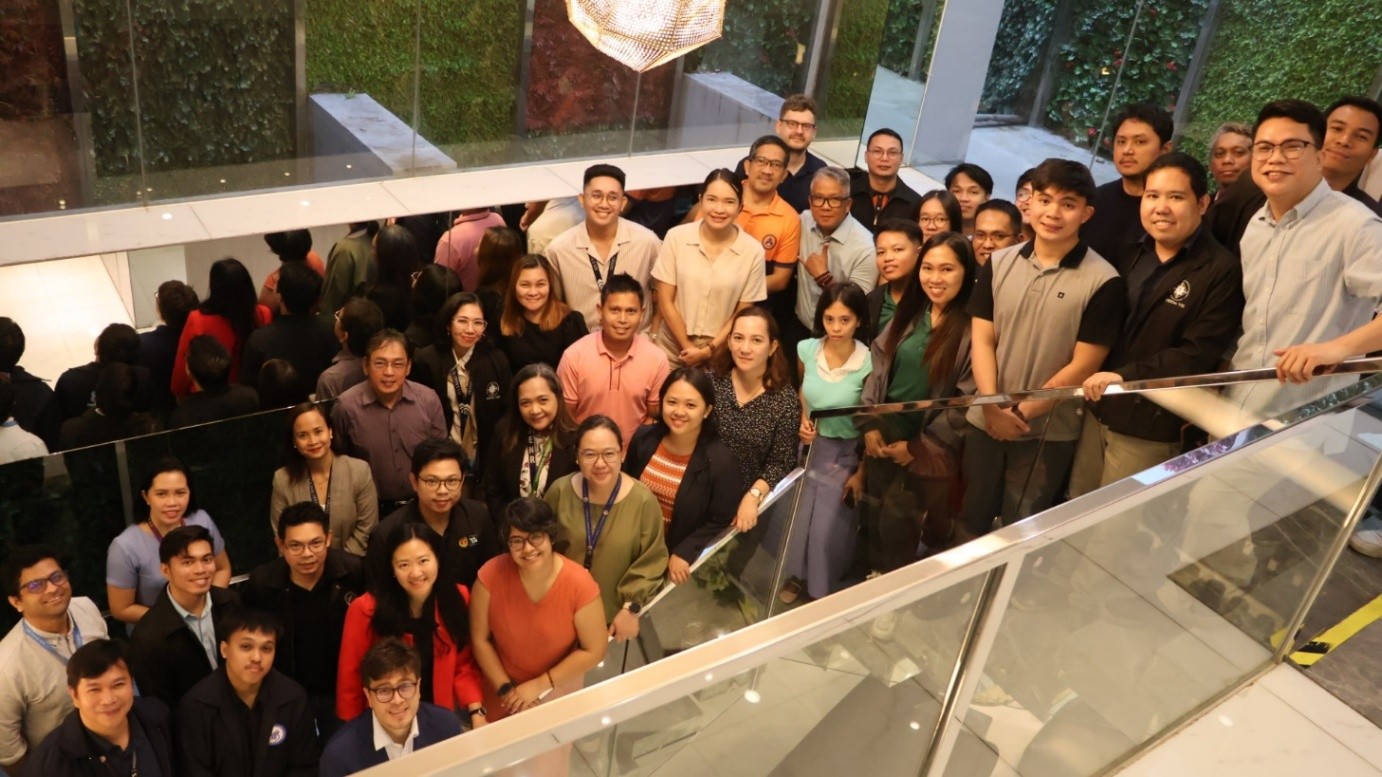
The project “Strengthening Climate Resilience in Eastern Visayas, Philippines through the Application of CLIMADA in Regional Land Use Planning” was launched with an Inception Workshop in Tacloban City, Eastern Visayas, on 28-29 April 2026. The project aims to quantify current and future climate risks of Eastern Visayas, and evaluate the cost-effectiveness of adaptation measures using the Economic of Climate Adaptation (ECA) Framework and the modeling platform CLIMADA. The project seeks to provide evidence-based information to support decision-makers in identifying cost-effective adaptation measures and strengthening the integration of climate risk information into regional and land-use planning.
The two-day workshop brought together around 37 participants, including government stakeholders from the Department of Economy, Planning, and Development, the Department of Environment and Natural Resources, the Philippine Statistics Authority, the Philippine Department of Science and Technology, Provincial Planning and Development Offices, academia, and civil society organizations. A significant objective of the workshops was to ensure the project’s alignment with existing government policies and ongoing initiatives to support successful implementation and sustainability beyond the project’s duration.
A key focus of the workshop was training participants on the CLIMADA modeling platform—an open-source tool developed to quantify climate risks and estimate the benefits of various adaptation strategies. In addition to CLIMADA training, the workshop provided foundational knowledge of Climate and Disaster Risk Finance and Insurance (CDRFI), offering insights into innovative financial solutions to help buffer communities against climate shocks. Participants collaboratively discussed and refined key elements of the upcoming assessment, including the geographical focus, priority sectors, key assets, and climate hazards to be analyzed. This workshop represents a critical step forward in Eastern Visayas´s path toward climate-informed planning by fostering technical skills, promoting collaboration, and aligning stakeholders around a shared vision. A User-Friendly dashboard will be developed to enable easy navigation and visualization of climate risk and financial data, further supporting local decision-makers in planning and budgeting for climate resilience.
Further information here